 Contacto
  Denuncias
  Est. Financieros
  Portal Clientes
  Proveedores

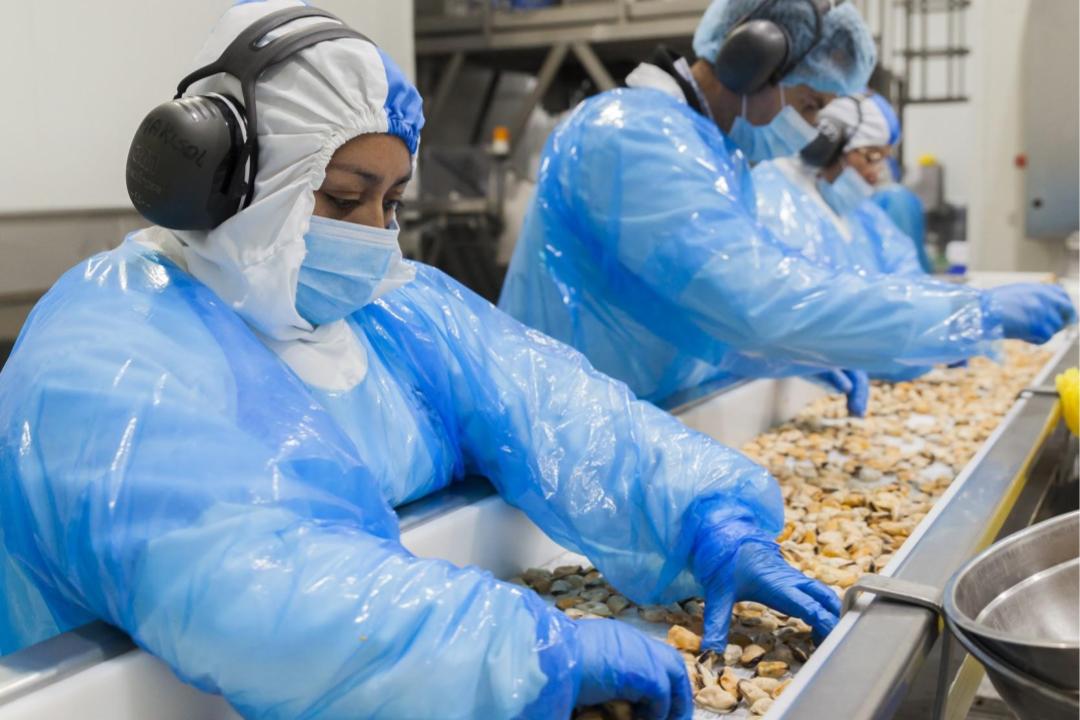
After authorities announced that the Chacao channel was open for cargo transport traffic, Camanchaca Cultivos Sur resumed operations at its mussels plant in Rauco, Chiloé.
Nicolás Guzmán, Director of Camanchaca Cultivos Sur, commented that maritime transport is more expensive than land transport, noting that it is not a definitive or sustainable solution, rather merely a short-term solution that allows activities to resume and jobs to be preserved.
“While business continuity is important, safeguarding people’s health and reducing the risk that COVID-19 will spread quickly remains paramount. We have redoubled health and hygiene measures, meaning we are operating at lower employee density and capacity,” said Guzmán, who added that the mussel farming industry has actively participated in strengthening the cordon sanitaire in Chiloé.
On March 27th, Camanchaca Cultivos Sur had announced that operations at the Rauco plant would cease due to the inaccessibility of routes for transporting the food produced, receiving critical supplies or disposing of organic waste. The stoppage involved 300 people.
Ricardo García, Chief Executive Officer at Camanchaca, noted: “The main challenge that we are facing today is demonstrating that, because we produce products for human consumption, our industrial activity in Chiloé operates under extremely high hygiene standards. We have taken these standards even further to protect our employees throughout their entire work cycle to ensure the conditions needed for them to safely continue to work.